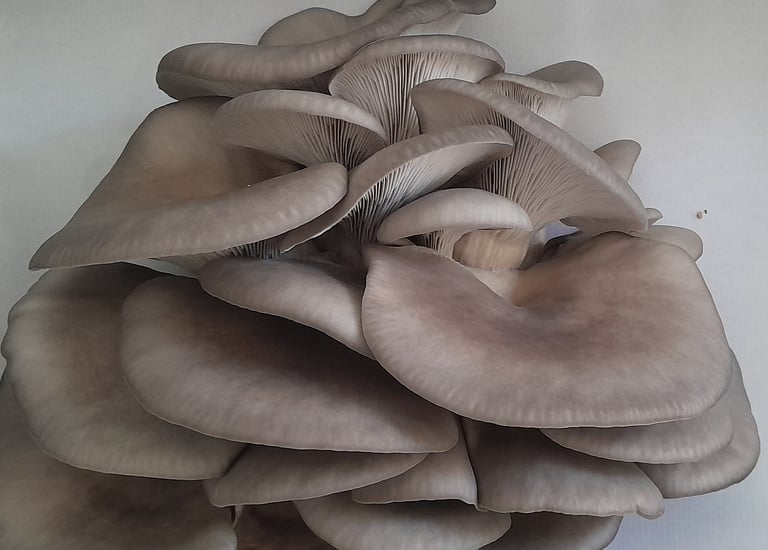
Pleurotus Ostreatus (Oyster Mushroom)
It's the most widely cultivated of the gourmet mushrooms. It's a fast growing mushrooms with a pleasant and mild flavour. Excelent for stir fries. I grow several different strains of this species and the vary in colour and shape but have identical taste.
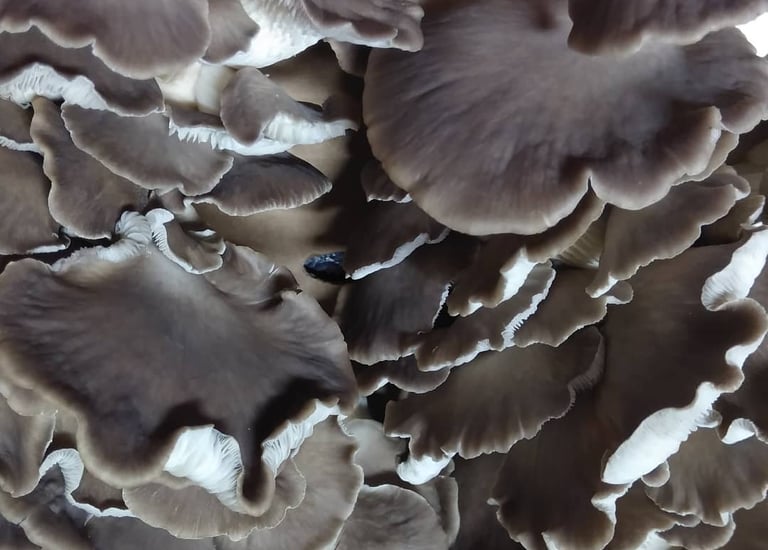
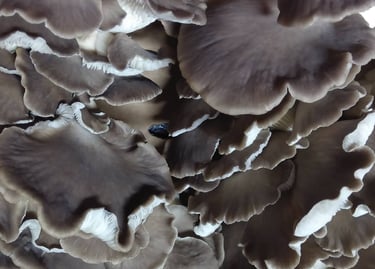
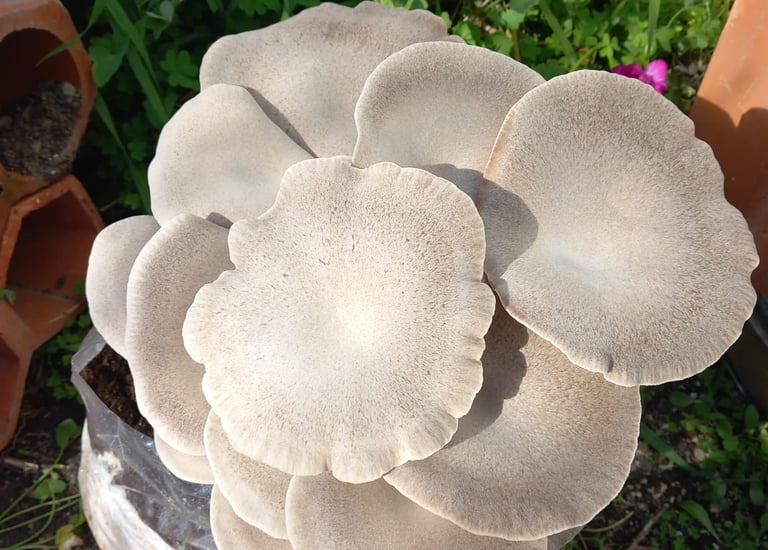
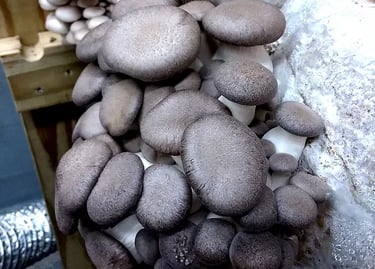
Pleurotus Pulmonarius (Mediterranean Oyster)
Very beautiful brown caped Oyster mushrooms native to the mediterranean forests. In nature, it is one of the few mushrooms that can colonize pine trees. Identical to the Ostreatus in terms of taste and texture.
Pleurotus Eringii (King Trumpet)
One of the most versatile mushrooms there is, culinarily speaking. Has a tough but not chewy meat. Can easily imitate meat and handles cooking prolonged times without falling apart. Excelent for all types of dishes. I grow them only in the colder months because they require low temperatures to fruit.
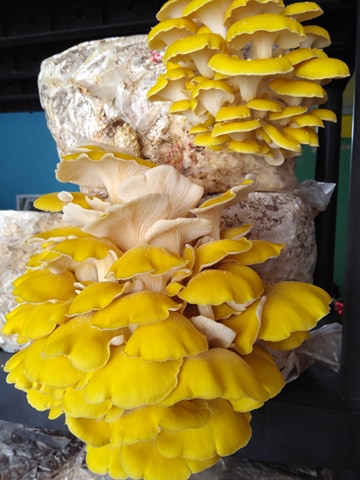
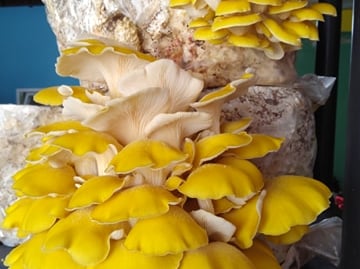
Pleurotus Citrinopileatus (Yellow Oyster)
This mushroom contains an organic compound called "p-anisaldehyde" that gives it a smell very similar to aniseed. Very floral. It is bright yellow and the taste is also floral. Good for giving a kick of floral notes to any dish. It is native to India and requires warm tempratures, so I don't grow it during colder months.
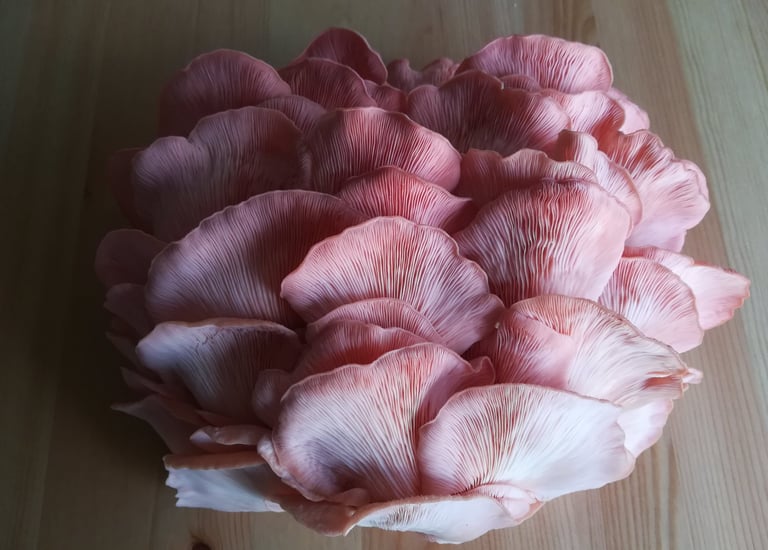
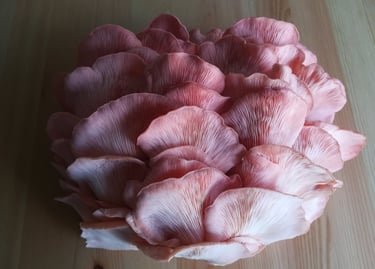
Pleurotus Salmoneostramineus (Pink Oyster)
Easily one of the most beautiful oyster mushrooms. Grown in ideal conditions, it is bright pink.
Loses its color during cooking. Taste is somewhat similar to the regular oyster.
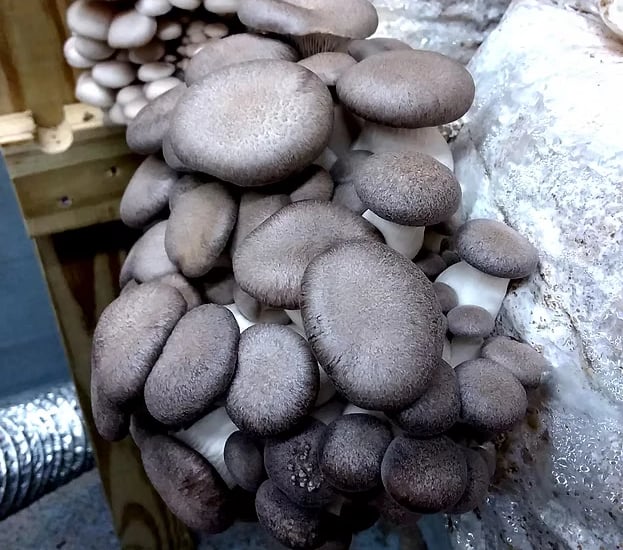
Shimofuri Hiratake (Black King Trumpet)
This is a very special mushroom. To my knowledge, I am the first person to grow it in Portugal. This is a hybrid between the european Ostreatus and some kind of Asian Ostreatus. It was crossbred in Japan and the result was a mushroom more closely resembling the Eryngii than the Ostreatus. The shape is very similar to the Eryngii and the flesh is almost as firm. It has a beautiful anthracite color cap.
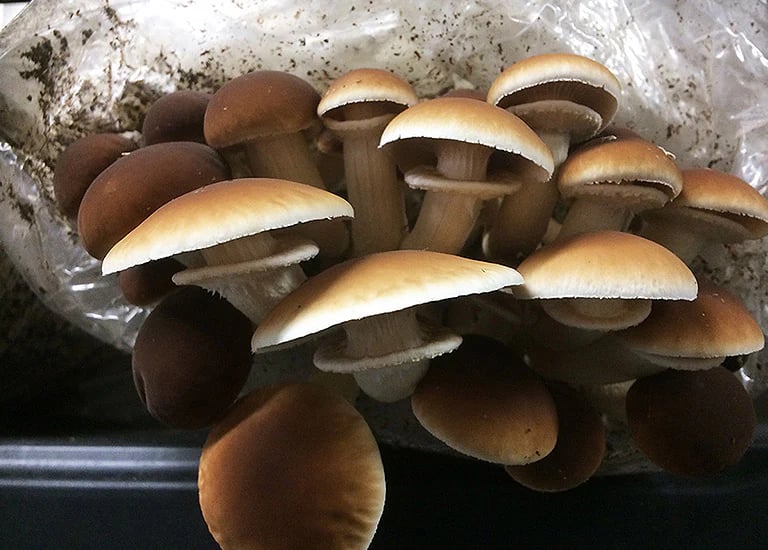
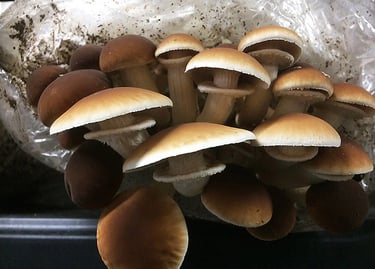
Cyclocybe Aegerita (Pioppino)
Amazingly beautiful mushroom with a velvet touch and a mate bronze cap. Grows in nature in the Iberian Peninsula, normally on dead Poplar trees. It's very tasty. Great for all the dishes that call for a tasty strong flavour of wild harvested mushroom. People who eat eggs love them with scrambled eggs. I eat them in risottos or simply stir fried. One of my personal favourites for sure.
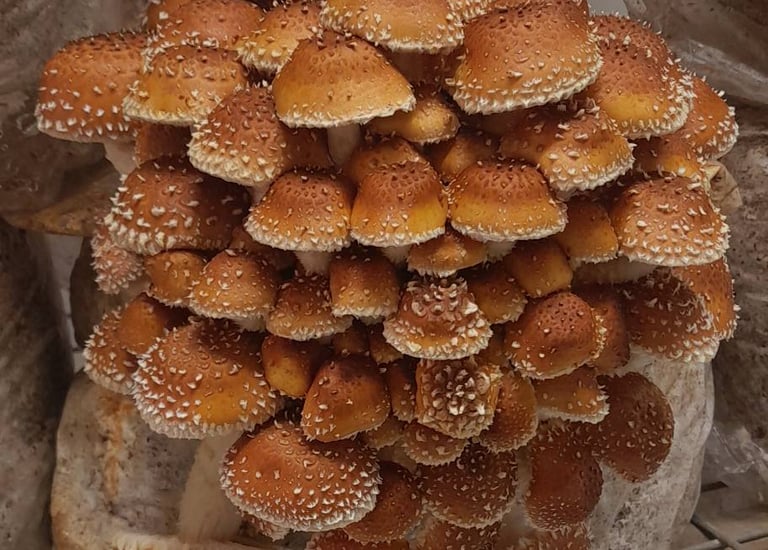
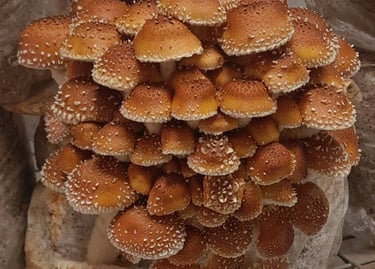
Pholiota Adiposa (Chestnut Mushroom)
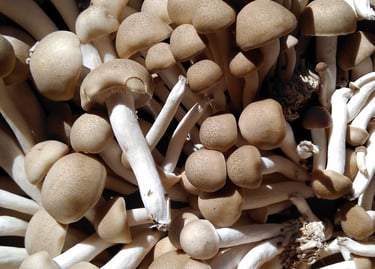
A very tasty mushroom. Of the ones I grow, probably the one that tastes like a wild mushroom the most. They have a strong flavour and can be use much like the Pioppinos. This mushroom has a slightly slimy texture on the cap, typical of the Pholiota family. It is closely related to the Pholiota Nameko, one of the most common mushrooms in Japan.
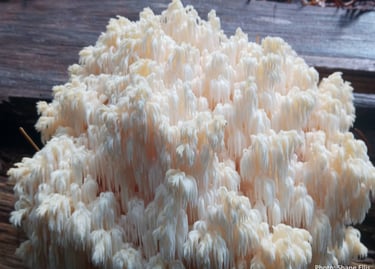
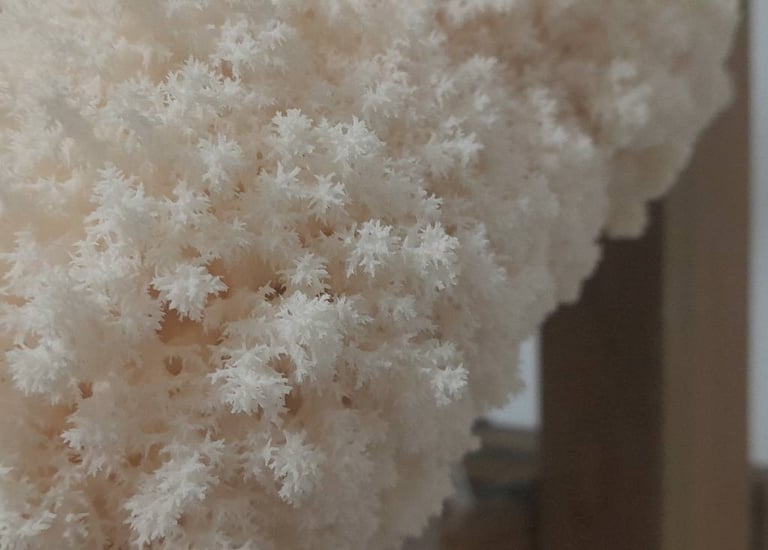
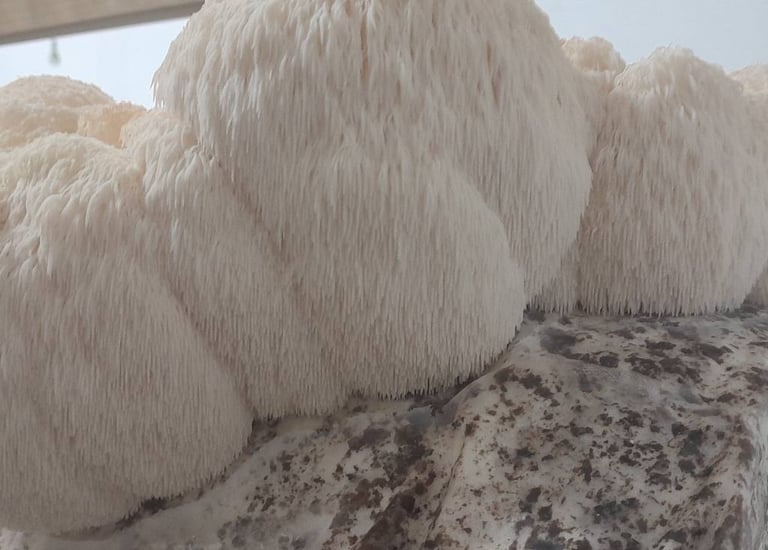
Hericium Erinaceus (Lion's Mane)
This very famous and weird looking mushroom grows like a ball of tissue and then develops this hairs/spines that make it look like a Mane of a Lion. It is soft and delicate with a mild taste with notes of nuts. Many people say its taste also resembles seafood and many call it "Lobster Mushroom".
There is solid research for it having neuro-regenerative properties and it has been tested with alzheimer's patients with promising results.
Hericium Americanum (American Lion's Mane)
A species closely related to Lion's Mane, that is native to the North American continent. Again, to my knowledge, I am the first person to grow it or at least grow it commercially in Portugal. Very similar in all aspects to the regular Lion's Mane, including the purported health benefits. It's is less dense and more funky looking, which presents different opportunities in the kitchen. Very nice mushroom to shred like pulled pork.
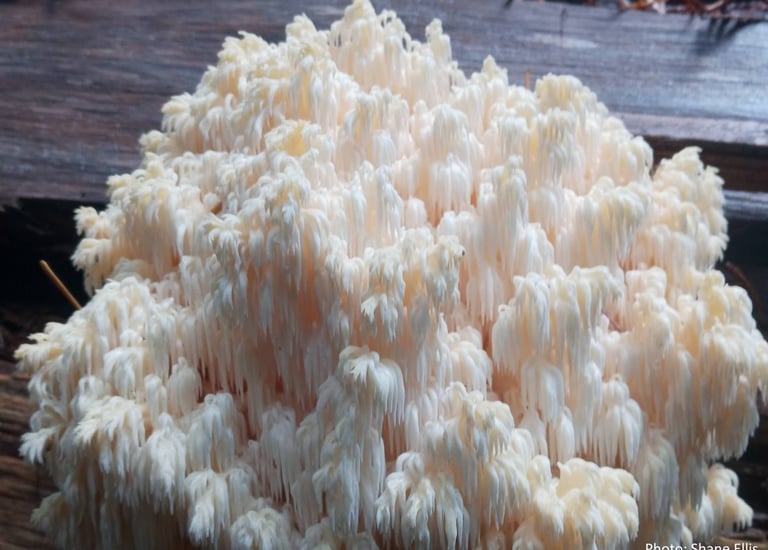
Hericium Coralloides (Coral Mushroom)
What is there to say? It is such a mesmerizing species. Closely related to the Lion's Mane. Grows very much like a coral. Very delicate mushroom with little commercial cultivation viability because it is very light when compared to other mushrooms. I grow it because I love looking at it. Expect to see it in small quantities in the mixed boxes from time to time. Also a first is Portugal for sure, maybe even the Iberian Peninsula.
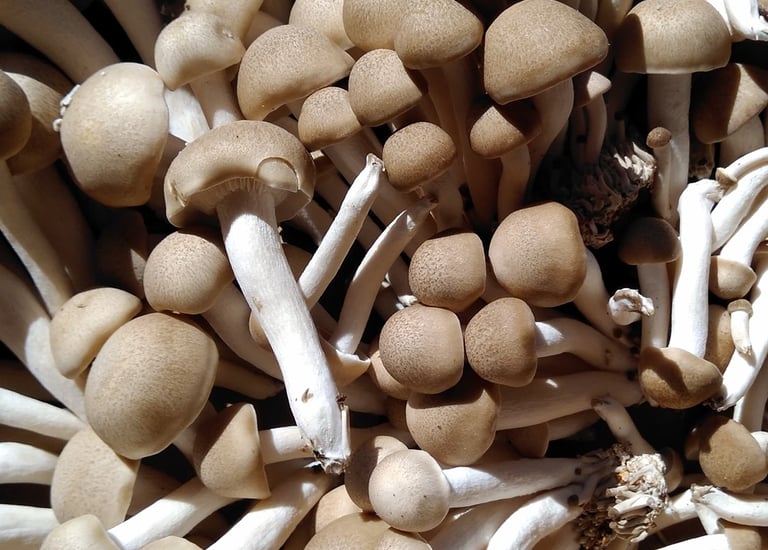
Hypsizygus Tessulatus (Shimeji)
A good looking, thin mushroom. Good for stir-fries, noodles, soups, and generally asian dishes. I don't grow it much because it requires fairly low temperatures. Expect to see it in small quantities in the winter.
Lentinula Edodes (Shiitake)
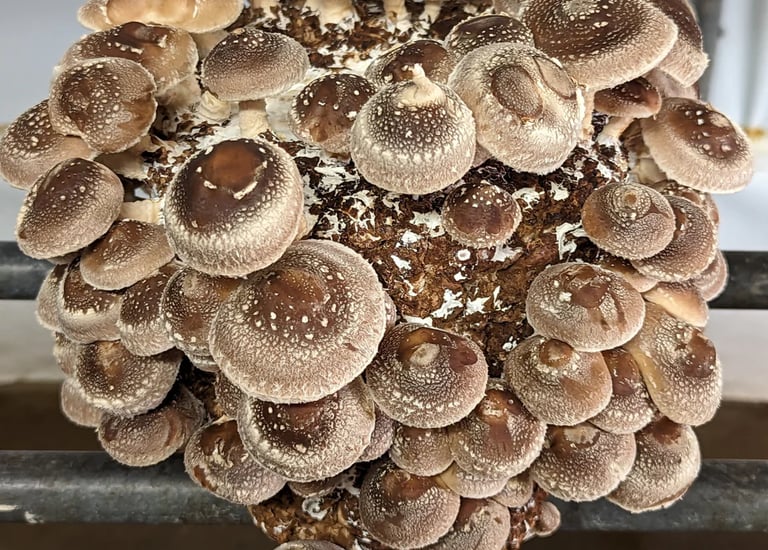
It's a very commonly produced mushroom in wood logs. In Portugal it is grown in Eucaliptus. I have cultivated shiitake before, but I normally don't because it requires fairly distinct techiniques from the other mushrooms and a separate growing environment.
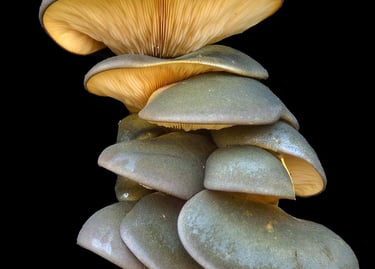
Sarcomyxa serotina (Mukitake)
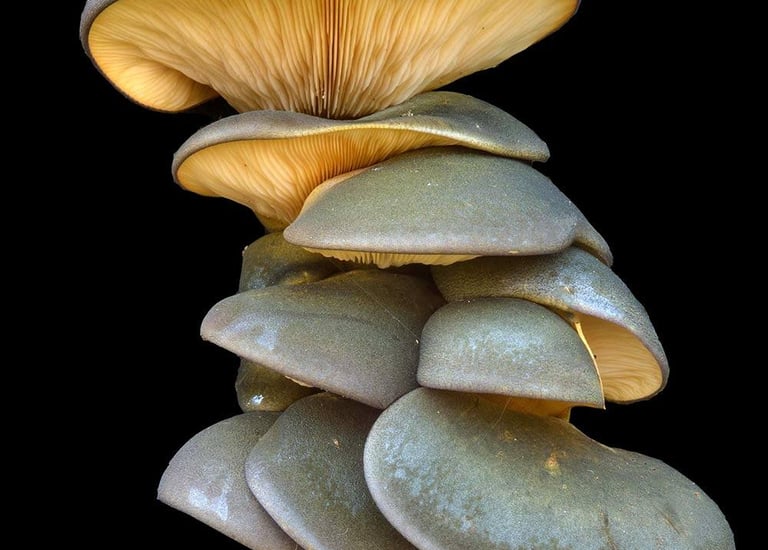
A mushroom that I haven't grown yet but I am trying to. It is fairly hard to grow and a very slow process. It looks like an Oyster but it not even in the same family of fungi. In Japan, where is is consumed as a choice edible (meaning Japanese people really like it) it is called Mukitake. In nature, it grows in late fall. It is not a commercial variety and not many people have attempted to cultivate it. And that's why I want to be one of the first to do it.
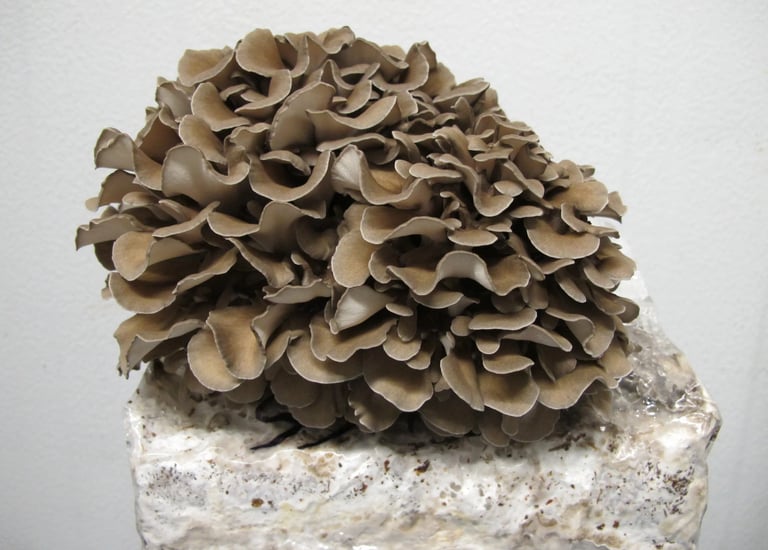
Grifola Frondosa (Maitake)
Maitake, which in Japanese translates to "dancing mushroom". It is a commercial species but so hard to cultivate that not many have managed to do so consistently outside of China and Japan. Some growers in the USA have been somewhat successful. I've been trying to cultivate it and I won't give up until I manage to. The picture is not mine. I haven't managed to fruit it yet.
Gourmet Species
Medicinal Species
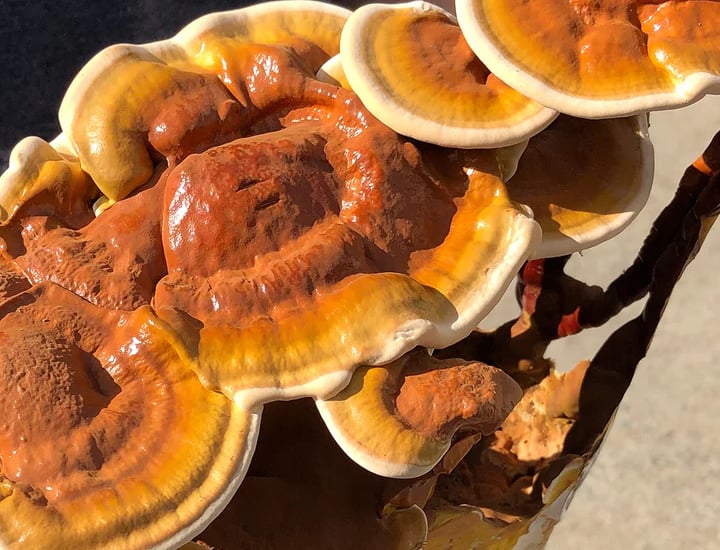
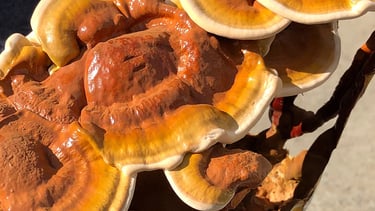
Ganoderma Lucidum (Reishi)
This is a strictly medicinal mushroom that I have grown in the past and am starting to cultivate again. I'm interested in it for personal health reasons as it has been shown to be anti-inflamatory, so I want to test it myself. Reishi has also been extensively tested in humans for anti-cancer effects. It has been shown to be reduce cancer in 50% of the people tested. The conclusion is that Reishi does indeed fight cancer, but only in certain people, having no effect on others. Scientists haven't discovered yet why it is effective in certain people. I am not opposed to eventually start selling it to clients, if there is interest in such a product.
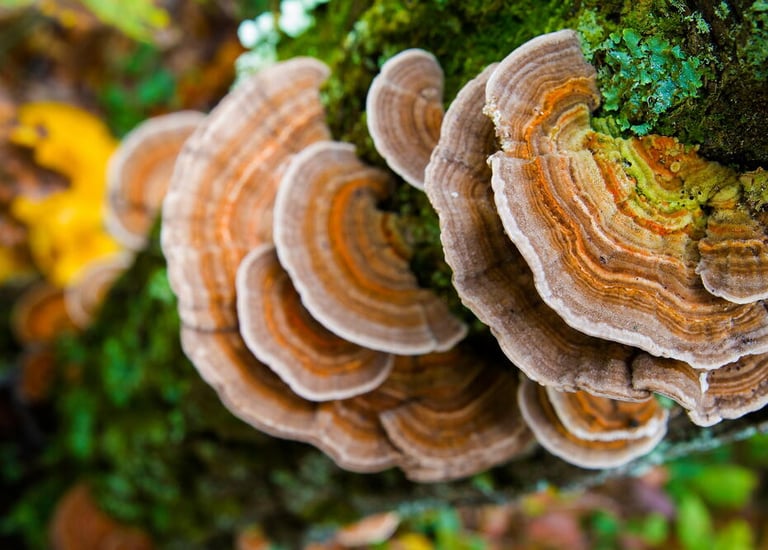
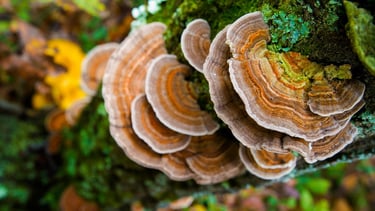
Trametes Versilocor (Turkey Tail)
A medicinal mushroom that I have never grown before. I am starting trials this year.
Much like Reishi, it is purported to have many health benefits and has been used in traditional medicine for many centuries.
Scientifically speaking, it has been tested in humans in the US and China as an adjuvant treatment for cancer, in which it was shown to have positive effects without side-effects. It also has anti-oxidant properties and supposedly helps with gastric issue like gas and dark stools.
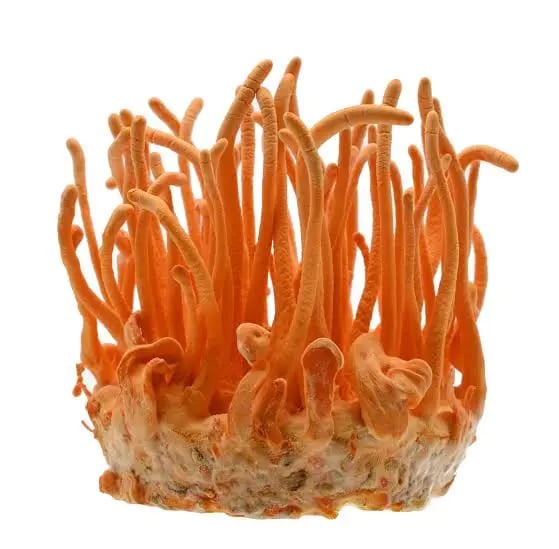
Cordyceps Militaris
A strictly medicinal fungi that I have recently initiated trials on. In nature, this fungus is a parasite that infects live hosts, insect. After infection, the mushroom takes over the nervous system of the insect and forces it, much like a zombie, to climb to a high point where the host grips in place and dies. The fungus then produces the fruit body and sporulates. It can be grown in vitro with advances lab techniques in substrates that do not involve the killing of any animals/insects. It does not infect humans, of course. It is reported to have many medicinal properties and to enhance stamina and physical energy by increasing the oxygen uptake in the body.
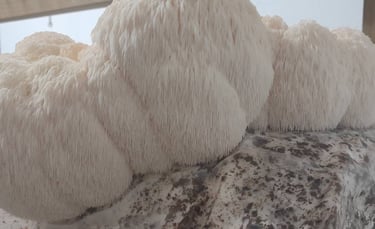
Hericium Erinaceus (Lion's Mane)
As stated above, there is some serious evidence to the purported benefits of Lion's Mane especially concerning Alzheimer's disease.
This is also the mushroom that has the most hype and the biggest amount of purported benefits, most of them without any scientific evidence to back it up.
For an impartial overview of the current scientific data on this mushroom I would start by watching this video:
https://www.youtube.com/watch?v=tSUURvSBR-4
Contact
Join our WhatsApp group for weekly mushroom updates
Phone
+351 910715365
© 2025. All rights reserved.
+351 910715365